The Ursid meteor shower, which marks the final celestial event of the year, will peak between Sunday night and early Monday morning.
Sky-gazers can expect to see five to 10 meteors per hour between midnight and 5 a.m. ET Monday, or between 9 p.m. PT Sunday and 2 a.m. PT Monday, said Robert Lunsford, fireball report coordinator for the American Meteor Society.
The meteor shower will peak around the time of the winter solstice, or the official beginning of winter in the Northern Hemisphere, when it is the farthest from the sun.
The winter solstice marks the longest night of the year and coincides with a thin and faint crescent moon, creating perfectly dark skies for optimal meteor viewing.
The shower will only be visible to those in the Northern Hemisphere because the radiant, or the point from which meteors appear to come, never rises high enough in the sky to by visible for those in the Southern Hemisphere.
Enhanced meteor activity
The Ursids originate from the bowl of the Little Dipper, also known as the Ursa Minor constellation, near the bright orange star called Kochab, Lunsford said.
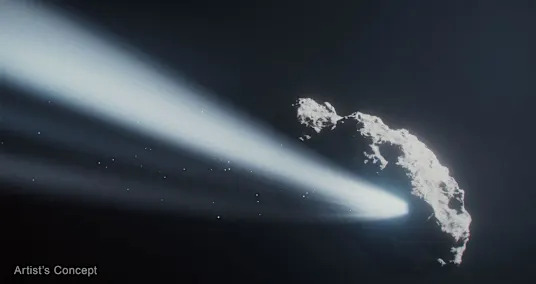
The meteor shower occurs as Earth encounters the stream of particles left behind by comet 8P/Tuttle, which sheds material as it orbits the sun, according to EarthSky.
This year’s shower activity could be enhanced by previous streams of debris from the comet, Lunsford said.
Each time comet 8P/Tuttle passes through the inner solar system during its orbit, the celestial object leaves behind a new trail of debris, he added. The trails are similar, but they aren’t exactly the same, meaning that Earth can pass through one trail and miss others.
“This year it is predicted that the Earth will pass through a particular trail which may give us a brief enhancement of activity,” Lunsford said via email.
How to see the Ursids
The shower is oft neglected because it delivers fewer meteors per hour when compared with the spectacular Geminids, which peaked a week ago, and it occurs close to the holidays when nights are often frigid and cloudy.
But it’s worth bundling up and finding a location away from city lights to observe the shower, Lunsford said.
“It is highly suggested that one try to view from the darkest location possible,” he added. “Folks viewing from closer to cities can only see less than 5 per hour.”
Face the northern half of the sky but avoid the temptation to look straight up, instead focusing about halfway upward, he advised.
Because the meteor rates per hour are lower for the Ursids than the Geminids, Lunsford recommends viewing for at least an hour for a chance to spot meteors streaking across the sky.
Celestial events kick off the new year
The new year will begin with a double celestial event.
January’s full moon, called the wolf moon, will peak on January 3 — which also coincides with the first meteor shower of the year, the Quadrantids.
While that shower is known for producing bright, slow-moving fireballs in the night sky, the brightness of the full moon is expected to dim the display of meteors.
Sign up for CNN’s Wonder Theory science newsletter. Explore the universe with news on fascinating discoveries, scientific advancements and more.
For more CNN news and newsletters create an account at CNN.com
LATEST POSTS
- 1
 A volcanic eruption may have catalyzed the plague's arrival in Europe, study suggests
 - 2In a first, scientists observe a comet reversing its spin
- 3Global measles cases drop 71% in 24 years as vaccination coverage improves, WHO says
- 4Two IDF officers, civilian face indictment in alleged Gaza aid-truck smuggling scheme
- 5Alix Earle built trust by sharing her acne woes. Now her skin care line is raising questions.




- 'Euphoria' releases Season 3 photos with Zendaya, Sydney Sweeney, Jacob Elordi and others: See them
- Volkswagen in talks with defence firms on use of Germany plant: CEO
- West Antarctica’s history of rapid melting foretells sudden shifts in continent’s ‘catastrophic’ geology
- $2,000 tariff rebate checks? 50-year mortgages? Making sense of Trump's new 'affordability' proposals.
- Shredded cheese recall: Multiple brands sold at Aldi, Target and Walmart affected over potential metal fragment contamination
- EU states agree first step for Ukraine reparations fund
- AfD in Brandenburg takes back suit against the intelligence service
- An Extended time of Careful Nurturing: Individual Bits of knowledge on Bringing up Youngsters
- Pat Finn, actor from 'The Middle,' dies at 60 after bladder cancer diagnosis