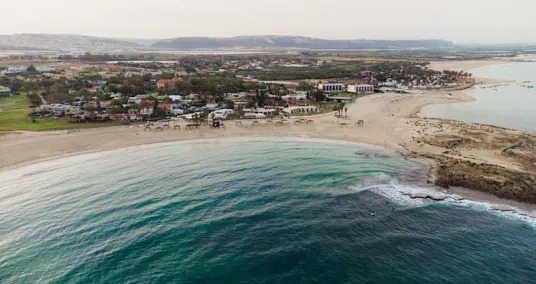
The discovery was made in an ancient shipwreck in the Dor Lagoon near the Carmel Coast, where archaeologists recovered nine pieces of unprocessed iron known as “blooms.”
Researchers from the University of Haifa said Wednesday that an underwater excavation off Israel’s northern Mediterranean coast uncovered what they described as the earliest known cargo of raw iron transported by ship, dating back around 2,600 years, Xinhua reported.
The discovery was made in an ancient shipwreck in the Dor Lagoon near the Carmel Coast, where archaeologists recovered nine pieces of unprocessed iron known as “blooms.” According to the university, the find provides direct evidence of how iron was transported in its earliest commercial stages.
The material was preserved in its original form, having solidified directly in a smelting furnace without undergoing forging or further refinement. Researchers said this distinguishes the cargo from later iron artifacts that typically show signs of shaping or tool-making.
Unlike copper and bronze, which could be melted into liquid form in ancient production processes, iron was heated with charcoal to produce a solid, porous mass. That mass was generally hammered to remove impurities and create denser material suitable for tools and implements.
The recovered blooms showed no indication of that secondary processing stage, suggesting they were transported immediately after production.

Earliest iron shipment discovered in ancient Mediterranean wreck
To determine the age and condition of the cargo, researchers conducted microscopic and chemical analyses.
Radiocarbon dating was also carried out on charred wood embedded in one of the pieces, helping confirm the timeline of the shipment. The findings were published in the journal Heritage Science.
Researchers said the cargo indicates that iron was being moved in raw form from production sites to other locations for further processing, pointing to a level of specialization in ancient manufacturing and trade networks in the Mediterranean.
The University of Haifa said the discovery provides new insight into early iron production and distribution practices in the region.
LATEST POSTS
- 1
 Mexico says a third of 130,000 missing people might be alive, fueling criticisms by families
 - 2Investigating Inside Plan and Home Style: Change Your Residing Space
- 3The hunt for dark matter: a trivia quiz
- 4Teen drug use remains low, but survey finds small rise in heroin and cocaine use
- 5Manageable Living: Eco-Accommodating Decisions for Regular day to day existence



- Invigorating Spots To Go Kayaking All over The Planet
- She was moments away from giving birth. The hospital discharged her
- How did I get my own unique set of fingerprints?
- Favored Chinese Dish: Make Your Determination
- ‘Harry Potter and the Philosopher’s Stone’ trailer is raising eyebrows among Potterheads: ‘Where’s the whimsical color?’
- Turning into a Sharp Financial backer: Individual budget Wins
- From Fledgling to Master: Self-awareness in a Side interest
- A hunger for new experiences Narratives: Motivating Travel and Experience
- David Duchovny's new thriller has him stripping down at 65. But its chilling premise hits close to home.