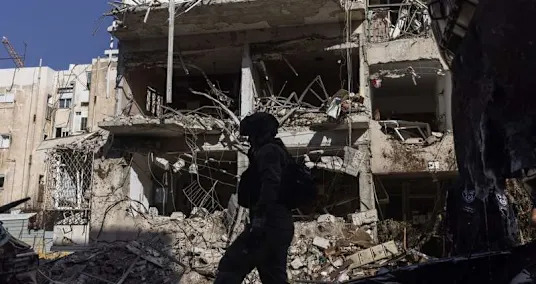
Israel’s security cabinet has signed off on plans to formalise 19 illegal settlements across the occupied West Bank, in a move Palestinian officials say deepens a decades-long project of land theft and demographic engineering.
Israeli media reported on Friday that the decision also revives two northern West Bank outposts dismantled during the 2005 “disengagement”.
The Israeli press outlet Ynet claimed the plan “was coordinated with the US in advance”, while Channel 14 said the push came from far-right Finance Minister Bezalel Smotrich – a settler himself and one of the most hardline figures in Israel’s governing coalition.
Settlement expansion, though illegal under international law, is widely accepted across Israel’s political spectrum.
Palestinian officials condemned the decision, warning that it accelerates Israel’s annexation drive.
Mu’ayyad Sha’ban of the Palestinian Authority’s Colonisation and Wall Resistance Commission described it as another step towards erasing Palestinian geography, saying it underscored growing fears about the future of the territory.
‘Colonial spoils’
Hamas condemned the plan as a dramatic escalation. In a statement, the group said the move “constitutes a dangerous escalation in the annexation and Judaisation project” and reflects a government that “treats Palestinian land as colonial spoils and desperately seeks to entrench a settlement reality, ultimately aiming for complete control over the West Bank”.
Hamas urged the UN and human rights organisations to confront what it called Israel’s “unchecked colonial behaviour”.
The Palestinian National Council also denounced the decision. Its head, Rouhi Fattouh, said the move “constitutes a double violation of international law and a blatant breach of international legitimacy”. He added that the policy “represents a systematic expansion of a colonial structure … a de facto colonial authority” outlawed under global legal frameworks.
The approval comes as Israeli forces and settlers escalate violence across the West Bank, against the backdrop of Israel’s genocide in Gaza.
According to the UN humanitarian office (OCHA), at least 232 Palestinians – including 52 children – have been killed by Israeli troops and settlers since the start of the year. OCHA has also recorded more than 1,700 settler attacks causing casualties or property damage, averaging five assaults per day across more than 270 communities.
Most attacks were clustered around Ramallah, Nablus and Hebron, areas long targeted by settlement expansion.
Meanwhile, more than 1,000 Palestinians have been forcibly displaced this year in Area C, which makes up roughly 60 percent of the West Bank and remains under full Israeli military control.
Homes have been demolished, seized or sealed, leaving entire communities without shelter as Israel entrenches an apartheid system across the territory.
LATEST POSTS
- 1
 I'm an 83-year-old yoga instructor. I'm not your typical grandma — I still work to feel fulfilled and supplement my Social Security.
- 2Palestinian leader Abbas says elections only after Gaza war ends
- 3Figure out How to Function Successfully with Your Auto Collision Legal advisor for the Best Result
- 4Figure out How to Remain Persuaded During Your Internet based Degree Program
- 5Golden satellite insulation sparkles during test | Space photo of the day for Dec. 30, 2025




- Picking the Right Home Machines: A Commonsense Aide
- Taylor Frankie Paul's domestic violence case is fueling discussions about DARVO. Experts say terms like this shouldn't be used lightly.
- Ukraine apologizes to Finland for crashed drones
- Israeli media reports Iran attacking greater Tel Aviv region
- What’s the shadowy organisation taking Gaza Palestinians to South Africa?
- 23 Most Amusing Messages At any point Sent Among Kids and Their Folks
- A Gustav Klimt painting is now the most expensive piece of modern art sold at auction. The fascinating history behind the $236 million 'Portrait of Elisabeth Lederer.'
- A mom's viral post is raising the question: Do kids need snacks? Dietitians have answers.
- 4 Famous Gaming PCs of 2024: Execution, Versatility, and Advancement