When you buy through links on our articles, Future and its syndication partners may earn a commission.

Astronomers have observed a strange but powerful supernova explosion that not only marked the death of a massive, highly evolved star, but also may have heralded the birth of a pair of binary black holes.
The team behind this discovery studied the supernova explosion SN 2022esa with the 8.2-meter Subaru telescope located at the Mauna Kea Observatory in Hawaii and the Seimei telescope in Japan.
They found the supernova was likely the result of the explosive death of a massive, hot, luminous star at the end of its evolutionary development, known as a "Wolf-Rayet star." This star dwelled in the galaxy 2MFGC 13525, located around 320 million light-years away from Earth.
The scientists discovered that SN the supernova demonstrated a clear and stable period lasting around a month, which led them to theorize that it was the result of periodic eruptions in this system, one each Earth-year before the final explosion.
That kind of stable periodicity is only possible in a binary system, the researchers say, indicating this doomed Wolf-Rayet star was partnered by either a black hole or a massive star that will one day explode to birth a black hole. The end result in both cases is a black hole binary.
"The fates of massive stars, the birth of a black hole, or even a black hole binary, are very important questions in astronomy," team leader Keiichi Maeda of Kyoto University said in a statement. "Our study provides a new direction to understand the whole evolutionary history of massive stars toward the formation of black hole binaries."
The team's findings don't just reveal more about binary black holes and their origins; they also demonstrate the power of teaming two different telescopes with different capabilities. The Seimei telescope brings flexibility and rapid response times to this tag-team, while Subaru provides its high-sensitivity.
As a result, these telescopes are likely to remain teamed for years to come.
"We expect many interesting discoveries on the nature of astronomical transients and explosions like supernova," Maeda said.
The team's research was published in November in Physical Review Letters.
LATEST POSTS
- 1
 A few Exemplary Chinese Dishes, Which Are Famous Around the world
 - 2Netanyahu expects Iran's leadership to fall
- 3Brilliant and Gleaming: Excellence and Skincare Practices
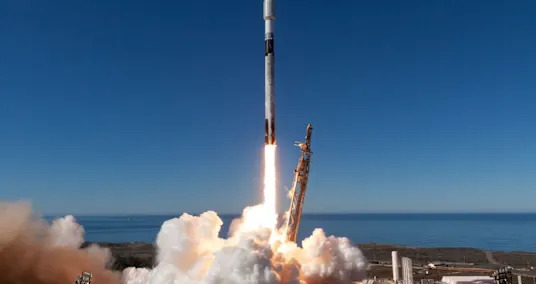
- 4Watch SpaceX launch 119 payloads to orbit from California early on March 30
- 5'The Boys' Season 5 premiere: How to watch for less, what to know about the final series and more




- Most loved Public Dish: Which One Addresses Its Nation Best?
- Image of foreigners being arrested in S.Africa during Eid is AI-generated
- Merck sees over $5 billion opportunity in Cidara's experimental flu drug
- Giude to Best Web based Learning Stage
- Extraordinary Picks for Home Apparatuses: Making Life Simpler
- Turning into a Sharp Financial backer: Individual budget Wins
- Interstellar comet 3I/ATLAS' journey through our solar system, in photos
- Mosquitoes carrying malaria are evolving more quickly than insecticides can kill them – researchers pinpoint how
- Earth’s magnetic field protects life on Earth from radiation, but it can move, and the magnetic poles can even flip