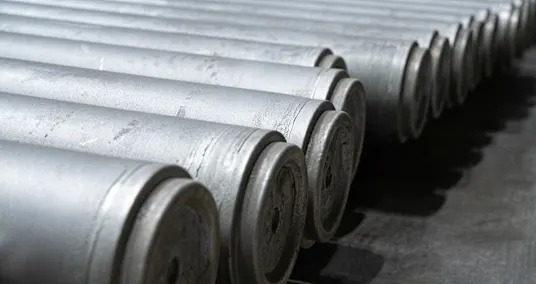
Fears of global aluminium shortages that could affect the production of clean energy technologies intensified after Iran struck two major Gulf aluminium producers, sending prices to a four-year high. The Middle East accounts for 9% of the world’s production of aluminum, which is essential to a wide range of industries from transportation, construction, and packaging, as well as the manufacture of solar panels, electrical transmission systems, wind turbines, and EVs.
Export shipments to the US and Europe had already come to a halt because of the effective closure of the Strait of Hormuz, and Morgan Stanley economists singled out aluminium as carrying a high level of risk across the value chain. Andy Farida, an aluminium analyst at Fastmarkets, told Semafor that high prices would be passed on to end-users, ultimately causing demand destruction. “A prolonged shutdown (with little to no alternative supplies other than Russia and China) could cripple the supply of aluminium to support the production of clean and green technology,” he said, adding that relief could come “if governments allow some sanctioned Russian and Chinese aluminium to be imported.”

LATEST POSTS
- 1
 Video of clashes over purported conscription orders misrepresented as anti-war protest in Israel
 - 2Revealing the Incomparable Realms: An Excursion through Power and Inheritance
- 3Relish the World: Notable Caf\u00e9s You Really want to Attempt
- 4This cafe takes orders in sign language. It's cherished by the Deaf community
- 5The top astronomical discoveries of 2025


- Like 'accelerating from stationary to supersonic flight': Europe's Hera probe boosts speed, stays on course for November asteroid rendezvous
- The most effective method to Alter Your Kona SUV for Greatest Solace and Comfort
- South Carolina's measles outbreak reaches 434 cases
- Euclid space telescope sees gorgeous cosmic cloud | Space photo of the day for Nov. 18, 2025
- ‘Everybody Loves Raymond: 30th Anniversary Reunion’ premiere date: How to watch, channel, time, cast and more
- HR exec caught on Coldplay 'kiss cam' with boss finally breaks her silence: 'I made a bad decision and had a couple of High Noons'
- Germany raises prospect of military forces to secure Ukraine peace
- 5 Food varieties to Remember for Your Eating regimen for Ideal Wellbeing
- Israel scales back use of top missile interceptors as Iran barrages persist