When you buy through links on our articles, Future and its syndication partners may earn a commission.

A new view of Mars showcases a dramatic impact crater on the Red Planet with its debris wings unfurling across the surface like a butterfly in flight.
The dazzling image, captured by the European Space Agency's (ESA) Mars Express orbiter captures a slightly elliptical crater measuring roughly 12 miles (20 kilometres) east to west and about 9 miles (15 km) north to south. The crater is surrounded by twin lobes of material that fan out to the north and south, evoking the delicate symmetry of a butterfly's wings.
Using data from the orbiter's High Resolution Stereo Camera (HRSC), the Mars Express team created a detailed video of the crater and its two outstretched wings, according to a statement from ESA.
"Typically we would expect material to be thrown outwards in all directions by a crater-causing collision," ESA officials said in the statement. "However, we know that the space rock that sculpted this martian butterfly came in at a low, shallow angle, resulting in the interesting and atypical shapes seen here: the butterfly's 'body' — the main crater itself — is unusually oval in shape, and the wings are irregular."
This butterfly-shaped crater lies within the Idaeus Fossae region of Mars, in the planet's northern lowlands, an area thought to harbor reservoirs of subsurface ice. The Mars Express imagery reveals debris that appears unusually smooth and rounded, suggesting that the impact may have struck water or frozen ground. As the ice melted, it likely triggered a fast-moving mudslide, leaving behind the distinct fluidized material that now stretches outward in the crater's wing-like extensions, according to the statement.
Several other interesting surface features are also captured in the Mars Express imagery. Around the crater rise steep, flat-topped mesas — some more than a thousand meters high — their dark, exposed edges hinting at ancient lava or ash flows that once shaped this terrain.

"The mesas stand out clearly against the tan-coloured surroundings due to the layers of dark material that have been exposed along their edges," ESA officials said in the statement. "As on Earth, this material is probably rich in magnesium and iron, and created by volcanism. This region likely saw quite a bit of volcanism in the past, with lava and ash deposits building up over time and being buried by other material through the years."
This isn't the first butterfly-like crater discovered on Mars — another sits in Hesperia Planum, a volcanic plain in the southern highlands — but such formations remain rare. Each example helps scientists better understand not only the angle and force of the impacts that formed them, but also the hidden layers of Mars' surface and what conditions existed when the collisions occurred.
LATEST POSTS
- 1
 Heavy rain, floods kill at least 45 people in Afghanistan, Pakistan
 - 2The Forgotten BMW Coupe That Turned a 5 Series Into Something Far More Exotic
- 3Pick Your Top Method for starting the Morning
- 4Ukraine: Russians abduct 50 Ukrainians from border village in Sumy
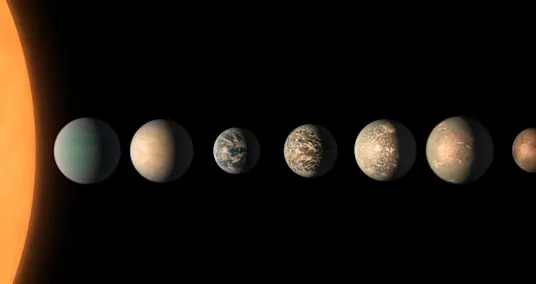
- 5These 45 exoplanets may be the best places to search for alien life




- Computerized Strengthening d: A Survey of \Upgrading Efficiency\ Programming Application
- Ryan Gosling responds to Deidre Hall's invitation to visit the 'Days of Our Lives' set: 'This is a very enthusiastic yes'
- Anti-war protests held across Israel under wartime gathering limits
- New Gaza militia declares war on Hamas: 'Your dirty shoes are more honorable'
- Don’t let food poisoning crash your Thanksgiving dinner
- Vote in favor of Your #1 Home Exercise Gear: Execution and Comfort Matter
- Disney's latest short film 'Versa' tackles a difficult subject: Pregnancy loss. It's resonating with viewers.
- The most effective method to Remain Ahead in the Most recent Advanced Patterns with a Web based Advertising Degree
- Astonishing Deserts All over The Planet You Really want To Visit