-
18-year-old Alex Yang founded an AI startup with students around the world he met online.
-
The team of high schoolers aims to improve Alzheimer's diagnostics through AI intervention.
-
Their startup launched an AI therapy product to help Alzheimer's patients with memory recall.
My typical morning starts around 3 a.m. I'm instantly met with Messenger notifications from web developers in California, GitHub pings from Florida, and a running document of research papers to read sent from Michigan. By 7:50 a.m. I'm off to class to live my life as an 18-year-old high school senior in Seoul.
This solitary ritual has become my strange normal after I founded an AI research and development startup with people all around the world, whom I've never met in person. My ambition was to improve Alzheimer's diagnostics, but I had no network, so I built one online.
I've always viewed Alzheimer's as a terrifying disease
Growing up, I heard stories about various family members battling Alzheimer's. I viewed the disease as something truly terrifying, which leaves behind only the shell of who someone once was.
I'd grown up knowing that someday, someone I love might disappear while still standing in front of me. In high school, this fear crystallized into something beyond passive acceptance.
I came across this competition, looking to fund ideas that can make health more accessible, and decided to apply.
BI's Young Geniuses series spotlights the next generation of founders, innovators, and thinkers who are trying to reshape industries and solve global challenges. See more stories from the series here, or reach out to editor Jess Orwig to share your story.
I knew I couldn't do the work alone. I had to find people beyond my network with diverse perspectives and skills capable of building something real together.
I started searching for partners by spending my time on internet forums and pitching my vision. I posted detailed research proposals on Discord servers and created GitHub repositories with preliminary code.
After a month of "nos," I got one "yes" from California. Then Florida. Then Michigan. Until there were six of us. We named ourselves Reteena (pronounced like "retina"), a deliberate wordplay symbolizing our mission to bring new vision to Alzheimer's diagnostics.
We became something none of us expected: a team of high schoolers from around the world who genuinely believed we could fix Alzheimer's.
My team and I decided to make Alzheimer's diagnostics more accessible and affordable
I didn't set out to target only high schoolers, but I was on servers mainly for students, and those were the people who responded.
LATEST POSTS
- 1
 Uzbekistan launches €9.46 billion green energy push, covering nation’s power needs
 - 2The most effective method to Succeed in Your Web based Advertising Degree: Procedures for Progress
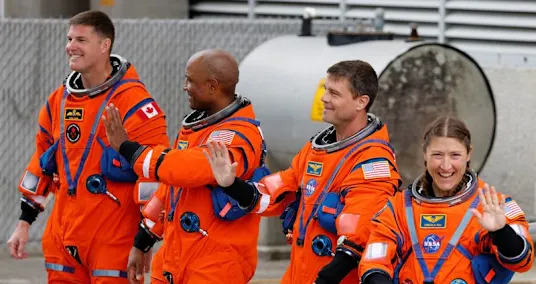
- 3Factbox-Artemis II crew includes first woman, Black astronaut and Canadian ever flown to moon
- 4NASA's Perseverance Mars rover could break the record for miles driven on another planet
- 5Vote in favor of Your #1 4\u00d74 SUVs




- New Cheetos and Doritos will be free of artificial dyes
- Iranian-linked drone attack kills Kurdish couple in northern Iraq
- In the stomach of a mummified wolf pup, scientists find DNA from a woolly rhinoceros
- Vote In favor of Your Favored Sort Of Dress
- How a rare drug made from scientists' blood saves babies from botulism
- 'Peaky Blinders: The Immortal Man' teaser trailer reveals Cillian Murphy's Tommy Shelby back in action
- Catch the moon dancing with bright star Regulus tonight
- Believe Should Unwind? Look at These Scaled down Games
- Honda’s Biggest Flex Isn’t Its Superbikes, It’s Selling 500K Bikes In One Month